
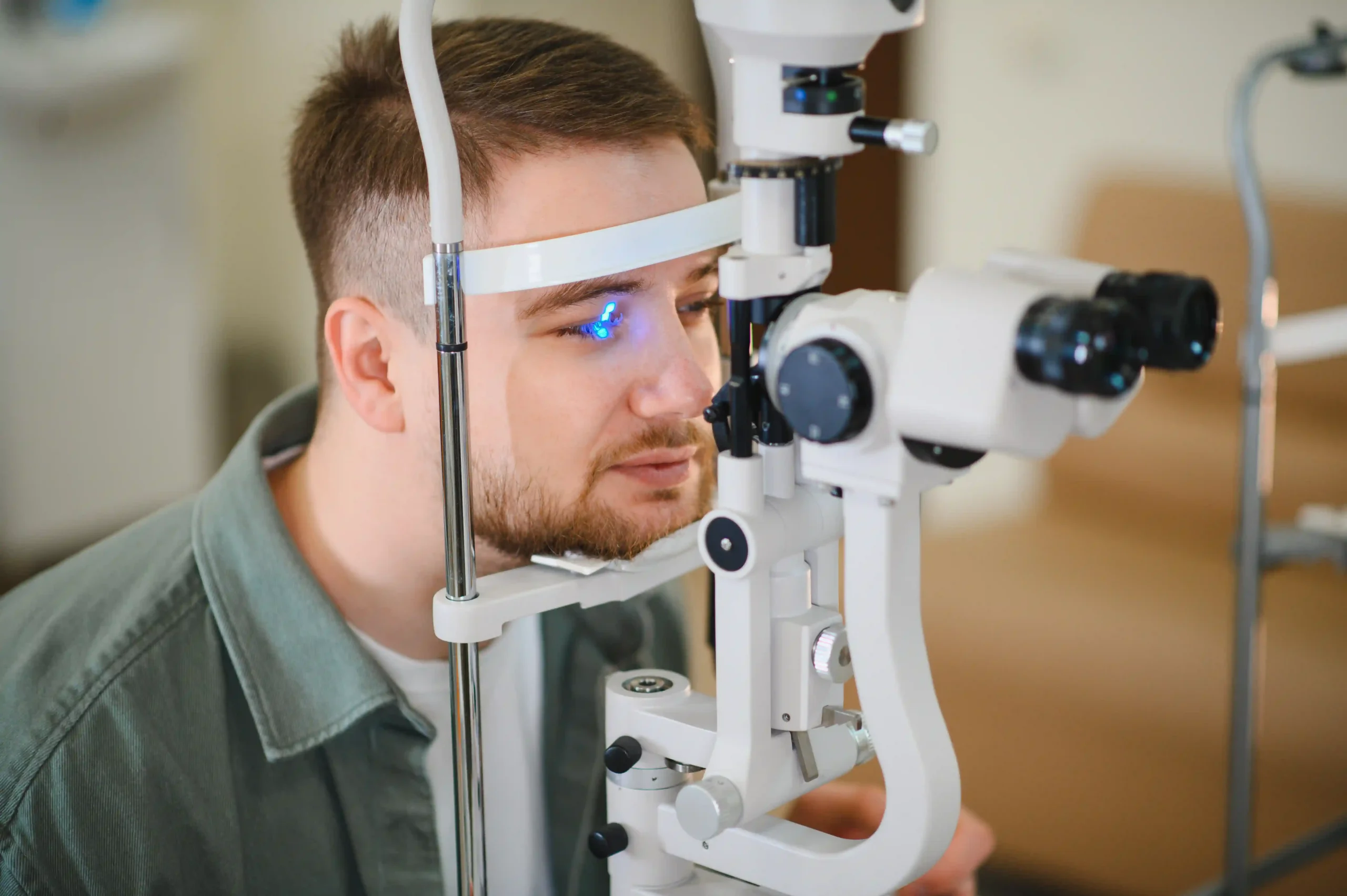
Seeing 20/20 means you can see clearly at a certain distance, but it does not guarantee that your eyes are healthy. Many eye conditions develop with few or no early symptoms, and some changes can affect your comfort, daily activities, or long-term vision before you realize anything is wrong. Regular eye exams give you a more complete picture of your eye health.
Eye exams can find eye diseases before you notice symptoms
Some eye diseases can progress quietly in their early stages. Glaucoma, macular degeneration, diabetic eye disease, and cataracts may not cause obvious symptoms at first, especially when only small changes have occurred.
During an eye exam, Dr. Chad Jackson checks the health of your eyes and looks for changes that may need monitoring, treatment, or referral. Finding an issue early can help protect vision before permanent damage occurs.
Eye exams can reveal signs of health conditions elsewhere in the body
Your eyes contain blood vessels and nerves that can reflect changes in your overall health. In some cases, an eye exam may reveal signs associated with diabetes, high blood pressure, high cholesterol, heart disease, autoimmune conditions, or neurological concerns.
If Dr. Jackson notices something that needs additional attention, he can explain what was found and help you understand the appropriate next step.
Eye exams can identify vision changes you may not recognize
You may have 20/20 eyesight and still experience trouble with reading, computer use, night driving, glare, eye coordination, or visual comfort.
Subtle changes can be easy to adapt to over time. You may not notice that you are holding reading material farther away, increasing screen brightness, avoiding night driving, or dealing with frequent headaches. An eye exam can identify whether a small prescription update, treatment, or other solution could make everyday tasks more comfortable.
Eye exams help monitor changes as you get older
As you age, you may become more likely to develop cataracts, glaucoma, macular degeneration, dry eye, or changes in near vision.
Regular exams create a record of your eye health over time. That baseline helps Dr. Jackson identify meaningful changes sooner and recommend how often you should return based on your age, health history, family history, and current vision needs.
Eye exams give you personalized guidance for protecting your vision
Your work, hobbies, medications, health conditions, screen habits, and family history can all affect your eyes. An eye exam is a chance to discuss concerns and get recommendations tailored to your lifestyle.
You may receive guidance on:
- Managing screen-related eye strain
- Protecting your eyes from UV exposure
- Maintaining comfortable contact lens wear
- Monitoring eye changes related to diabetes or other health conditions
- Knowing when to schedule your next exam
Protect your vision with regular eye exams
20/20 vision is a great starting point, but it is not the full picture of eye health. Regular eye exams can help detect concerns early, support comfortable vision, and keep you informed about changes that could affect your sight.