
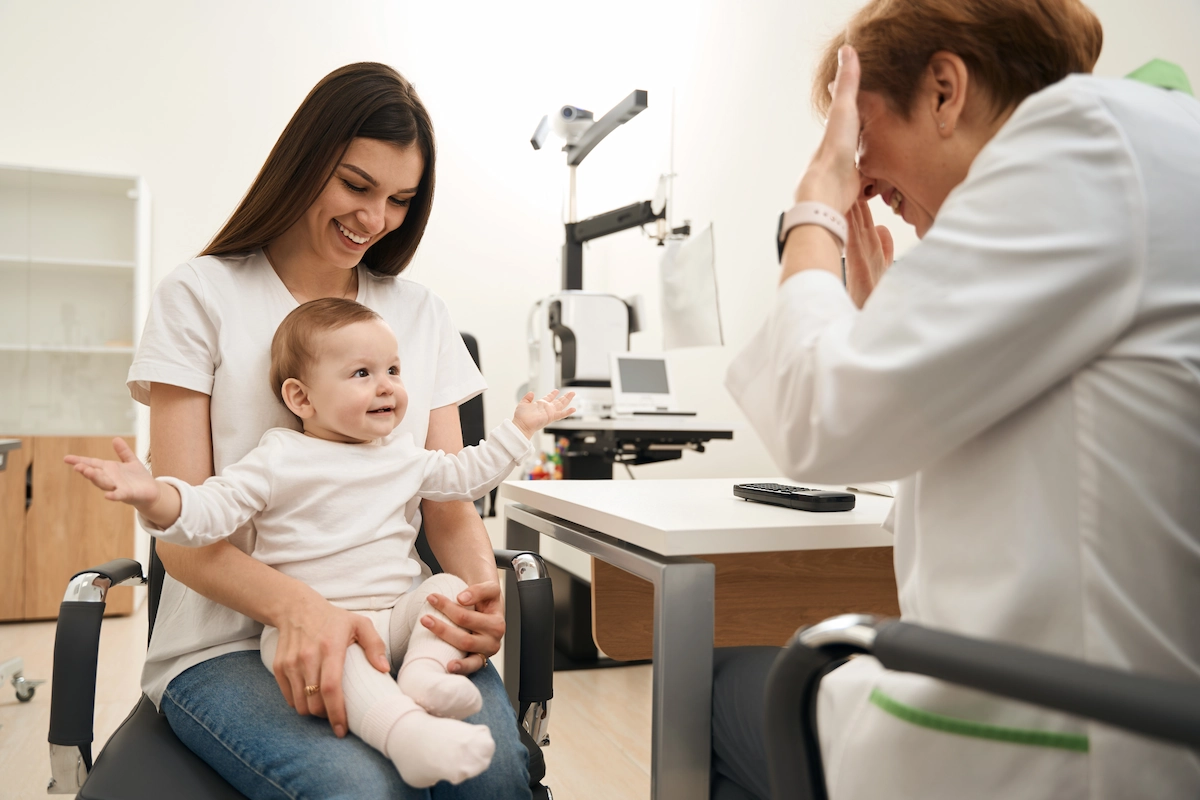
Many parents assume their child does not need an eye exam until they start school or begin having trouble seeing. But vision develops rapidly during a baby’s first year, and early eye care can identify concerns before they affect learning, coordination, or long-term visual development.
For most children, the first eye exam should happen between 6 and 12 months of age.
When should babies have their first eye exam?
The first year is an important time for vision development. The American Optometric Association recommends a first eye exam between 6 and 12 months. InfantSEE® exams are designed for babies in this age range and are available at no cost, regardless of insurance coverage or family income.
During this early stage, Dr. Chad Jackson can check how your baby’s eyes focus, move together, and respond to light. He can also look for signs of concerns such as:
- Crossed eyes, also called strabismus
- Lazy eye, also called amblyopia
- Nearsightedness, farsightedness, or astigmatism
- Eye health or structural concerns
Your baby does not need to read an eye chart or explain what they are seeing. A child-friendly eye exam uses gentle techniques to evaluate vision and eye health at their developmental level.
Why not wait for a school vision screening?
Screenings are useful, but they are not comprehensive exams. School and pediatrician screenings can help identify some vision concerns, but they do not replace a comprehensive exam with an optometrist. A screening often measures how clearly a child sees at a distance, while a full exam evaluates eye health, alignment, focusing ability, and other issues that may not be obvious.
Regular pediatric eye exams can help catch vision problems early, before they begin to interfere with reading, classroom focus, sports, or confidence.
What signs may mean your child needs an exam sooner?
Some children with vision concerns do not show obvious symptoms. Still, frequent eye rubbing, trouble tracking objects, a noticeable eye turn, sensitivity to light, or a white appearance in the pupil should be evaluated promptly.
Squinting, tilting the head, sitting very close to screens, and difficulty following moving objects are also signs your baby may have a vision problem. These behaviors do not always point to a serious concern, but they are worth discussing with an eye doctor.
What happens after the first exam?
If your baby’s exam is healthy, Dr. Jackson can recommend when to return based on your child’s needs. As children get older, ongoing exams can identify changes in vision and support success in school and daily activities.
If glasses are needed, we can also help your family find comfortable, durable children’s eyewear that fits your child’s lifestyle.
Give your child a clear start
A first eye exam between 6 and 12 months gives your child’s vision a strong start. We offer InfantSEE® exams and pediatric eye exams for children of all ages. Schedule an appointment to make sure your child’s eyes are developing as they should.